Monday, June 4, 2012

The Affair at Plummer's Crossing


Nate and Bertha Plummer left St. Louis, Missouri shortly after they were married in June of 1932.  Nate had worked setting type for the St. Louis Gazette until he had saved enough money to ask Old Man Daker for Bertha’s hand in marriage.  At 28, Nate was ten years older than Bertha and if not fawningly in love with her, he felt it was time to take a wife and make his way in the world.  Nate's Uncle Troy, on his mother's side, had beckoned him west, to Cheyenne, Wyoming, claiming that the American west needed men who had ambition and drive.  It would, Troy said, reward those who seized the opportunity by moving west and becoming a part of it.  Bertha welcomed any circumstance that would take her away from a domineering mother and found the thought of moving to the frontier, as it were, enticing.  When they arrived in Cheyenne, Uncle Troy welcomed the two with open arms, but within days directed them farther west, to the town of Cody where he thought Nate might start a newspaper.  Without saying so, Uncle Troy reckoned that the other end of the state was close enough for kin to live. 
So on they travelled, with Bertha beginning to question the wisdom of their first life altering decision as a married couple.  Once there, Nate was able to stake claim to a piece of land at the intersection of two dirt roads just north of town.  It was by then the spring of 1933.  His plan to start a newspaper as Uncle Troy suggested was quickly put to rest when he learned that the Cody Enterprise, founded by none other than Buffalo Bill Cody himself, and one Colonel John Peake in 1899 was already there, alive and well.  So, under Bertha’s close supervision, Nate singlehandedly constructed a building with their living quarters in one end and space for a general store in the other.  He opened the business and called it “Plummer’s Crossing.”    Nate chose that particular location reasoning that once those roads were paved, he would capture all the tourist traffic bound for Yellowstone National Park’s eastern entrance.  And he figured he’d corral all the north-south traffic heading from Utah and Wyoming up into Montana.  Bertha kindly pointed out that if he made five cents, a reasonable sale in 1933, from every car that drove into Montana from Utah and Wyoming, he wouldn’t have enough to buy a can of paint that, she also pointed out, the establishment sorely needed.  Bertha stayed on until 1938 at which time she decided that she had given Nate and the enterprise time enough to succeed.  The couple had different ideas of what defined success, and compared to the Spartan life of a homemade shack in Wyoming, well, even life near her mother seemed an improvement.  So, in the fall of that year, before the first snow, Bertha returned to their native St. Louis. 

Bertha's train had probably not yet ground to a halt back in Missouri before Nate held a sale on bolts of calicoes, ginghams, fabrics of all descriptions and anything that could even remotely be identified as a "notion."  He aimed to discontinue selling “female dry goods,” as he called them.  It was part of his effort to purge Bertha and her influence from his mind and memory.  He used the floor space to accommodate a bar, as fully stocked as could be found in Wyoming in 1938 and a few tables for his guests.  (He no longer referred to them as "customers," as Bertha had.)  He even used some of the gingham with which to fashion tablecloths, an idea of his own that brought a smile to his face every time a guest commented on them.  The business flourished with local support.  The following spring, Nate added “home cooked” food and his business grew even more.  So, when some state politicians had other ideas as to where the road into Yellowstone should go and it bypassed Plummer’s Crossing altogether, the locals continued to support Nate’s business well enough to keep the doors open and afford him a decent, if not lavish, living.

It was an evening in late October of 1954 and the first dusting of snow made its way down to the foothills and Plummer’s Crossing from Heart Mountain.  Twilight came in the late afternoon that time of year and by seven o’clock, it would be as dark outside as it was going to get.  There was just a sliver of a moon that night and it would hide itself behind the peak of the mountain causing an eerie, craggy silhouette that dominated the sky more than it deserved.  It was cold.  The few who were gathered in Plummer’s Crossing were glad to be inside and thankful for the ample firewood that had been split and stacked during the summer and fall months.  The burning of the Aspen and Cottonwood logs gave off an aroma that was as welcoming as the fire was warming.
Nate had hired Jenny Cooper, the lovely wife of “Big Dan” Cooper, and mother of young Bradley Cooper to do the cooking and take care of the kitchen.  He tended bar and ran the general store which was still the money maker of Plummer’s Crossing.  It was a workable arrangement for both Nate and Jenny.  She would arrive at five o’clock every morning driving a beat up and worn out old Ford pickup with six year old Bradley in tow.  On days when he would need the truck, Big Dan would deliver his wife and boy to the store.  She would cook breakfast for the cowhands and other locals then see Bradley off on the school bus, the Crossing being the northern limit of the Cody school bus route.  In the late afternoon the bus would drop Bradley back at the Crossing and he would do his homework while his mother prepared the evening meals for Nate’s guests.  After her duties were complete, Jenny and Bradley would be on their way back to the modest horse ranch that Big Dan hardly kept running twelve miles north of the Crossing.  Nate paid Jenny $25 a week plus food that included Bradley’s breakfast, a sack lunch that she’d prepare and dinner.  He encouraged her to take leftovers from the kitchen home, which she did with gratitude.

Big Dan Cooper was an angry and jealous man.  After taking over the meager ranch that an uncle left him for the payment of taxes owed, he sank what little additional money he had saved from working rodeos handling the livestock into a quarter horse mare that was overpriced and proved to be barren.  He then borrowed money from the Cody Farmers and Ranchers Bank to buy a stallion that he called “Thunder” for stud.  But, alas, Thunder showed no interest in mares causing Big Dan to declare him “queer.”  His horse buying decisions had dug a financial hole that he was yet to crawl out of and he acted as though the answers to his problems were printed in the bottoms of whiskey bottles.  He hated that Jenny worked at Plummer’s Crossing.  And he hated the men whom he thought hung out there just to be around her.
On this chilly night, Buck Cafferty sat drinking a cup of coffee at a table near the big stone fireplace that occupied most of the wall at the end of the room.  His son DuMont was two years older than Bradley Cooper and rode the bus to and from school in Cody with him.  The boys had become close friends and spent their afternoons together playing and doing their homework at the Crossing.  Buck’s wife had died in childbirth, leaving just him and the boy.  Nate and Jenny didn’t mind having DuMont around.  It helped Buck out and gave Bradley someone to play with while his mother worked.  Buck and DuMont ate at the Crossing most every night to return the favor.  Buck was a livestock broker and had advised Big Dan against the two mistakes that had cost him dearly.  And in the spirit of no good deed going unpunished, Big Dan never forgave him for it.

Truth be told, Buck Cafferty was in love with Jenny Cooper.  He had not intended it and tried like hell to never let on that he did.  He fought mightily not to stare at her as she went about her work.  She had a natural beauty that needed no help from make up or cosmetics.  Her hair was coal black that shone with a luster giving it the appearance of silk like strands of onyx.  Whether she wore it cascading down her delicate back, or pinned up on her head, it was flawless and lovely.  Her eyes were a deep blue that could only be compared to the big western sky on a cloudless day.  They were always smiling and kind.  Looking into them, for Buck, was often embarrassing.  He would lose his thoughts and stumble on his words.
Of course Jenny knew that Buck was attracted to her.  But she had a jealous and demanding husband.  She knew that Big Dan disliked Buck.  She knew that he resented Buck’s ability to make a fair living selecting and selling good livestock.  Still, there stirred in her a tingling of sorts when she saw Buck’s long and lanky figure stride into the Crossing.  He had a full head of chestnut hair that filled his Stetson and spilled over ears and onto his collar.  His natural expression was a subtle smile that framed his dark brown eyes.  She found it appealing, especially given his circumstance.  He spoke kindly, he treated her gently, and he displayed a love for his son that would melt a mother’s heart.  He treated her son just as well as he treated DuMont.  Buck and Jenny had a respectful admiration that went beyond the physical.

“Will Dan be picking you up tonight, Jenny?” he asked as she wiped clean the oilcloth spread on the table next to his.  “I didn’t see your truck outside.”
“Yes,” she answered, checking the clock over the bar.  “He should be here soon, I expect.  He had to pick up some posts and fencing from Cargill’s down in Cody this afternoon.”  In fact, she had expected her husband before then and silently hoped that he hadn’t stopped off at Muddy’s Saloon.

Bradley and DuMont were over in the corner of the room playing a pinball machine.  A salesman out of Laramie had come through back in the summer and talked Nate into buying it.  “It’ll bring people in and keep ‘em here longer,” he’d said.  When the weather was cold or rainy, Jenny would give the boys nickels that she kept for that purpose but only after they finished their homework.  The boys competed for high score on the old machine and when they had exhausted their supply of nickels, Nate gave Jenny more knowing that they would go right back into the machine.

Jenny continued moving about the room, making work to pass the time as she waited for her husband.  Bradley and DuMont lost interest in the pinball machine and came over to sit with Buck. 
The last of Nate’s bar guests left, smiling and tipping their hats to Jenny as they moved out the door.  Only she, Nate, Buck and the boys remained.  Nate looked up at the clock and motioned Jenny over.

“Shouldn’t Dan have been here by now?” he asked.
“I would have thought so.” she answered, unable to hide her concern.  “Cargill’s closes at five but there was no answer when I called home.”

Nate was aware of Big Dan’s fondness for drink and suggested, “Why don’t I give Muddy’s a call?  See if he’s there.”
Nate picked up the telephone and waited for the operator.  “Bea, hey, how ‘bout ringing Muddy’s Saloon for me, will ya?”  He waited a moment.  Then, “Hey, Muddy… Nate Plummer, here.  Say, is Dan Cooper there this evenin’?”  He paused.  “No?  Okay.  Thanks, hear?”  Nate put the phone back in the cradle.  “They haven’t seen him, Jenny.”

Jenny didn’t know whether to be relieved or worried.  She looked at the clock and back at Nate.  She glanced over at Buck.
“It’s quarter to eight, Jenny,” Buck said.  “Why don’t you let DuMont and me drive you two home?”

Nate said, “It’s time to close up, Jenny.  You know you are welcome to stay.  But it might be best to let Buck take you.”

“It’s a long way for you, Buck,” she said.  “We don’t want to trouble you.”

“You know it’s no trouble, Jenny.  C’mon, let’s all get in the truck.”
Bradley and DuMont slipped into their jackets and picked up their school books.  Jenny went back into the kitchen and got her own jacket and purse.  She had a paper sack with a few pieces of leftover fried chicken and some potato salad that she had set aside for her husband’s dinner. 

Buck and the boys were already outside when Jenny got to the door.  She looked back at Nate.  “See you in the morning,” she said.

He nodded.  “Give me a call when you get home and let me know everything is all right, will you?”

“Sure, Nate,” she answered.  “Thanks for your concern.”
Jenny opened the passenger door of Buck’s Chevrolet pickup.  Bradley and DuMont were already in and sitting on the bench seat.  Buck had started the engine so the truck would warm to ward off the night air that continued to drop in temperature.

The snow was falling harder as Buck drove north toward the ranch.  The flakes fell and swirled in the beams of the truck’s headlights.  Jenny stared blankly through the windshield wondering where her husband could be.  She dreaded another embarrassment if he were off drunk somewhere.

Buck slowed as he approached the entrance to the ranch.  He turned onto the gravel road under the large wooden sign identifying the place as “Circle C Ranch.”  No lights were evident as Buck approached the modest house, though his headlights found Big Dan’s truck that was parked over by the barn.  The door to the barn was open and the tailgate of the truck was down.  When Buck stopped, Jenny opened her door and stepped tentatively from the truck. 
“Let me get the boys in the house and turn on some lights,” she said, looking all the while toward the barn.

“Okay,” Buck answered already out of the truck and walking.  “I’ll check the barn.”
Bradley and DuMont followed Jenny into the house.  She turned on lights and walked back through the kitchen, searching about as she went.  “Dan?” she called.  She found nothing as she continued into their bedroom.  “Dan, are you here?”

Finding nothing, she returned to the living room.  “You boys stay inside,” she said.  “I’ll be right back.” 
Jenny quickened her pace to a trot as she approached the barn.  She saw that Buck had lit a kerosene lamp and was over in front of the stall that held Thunder.  In the flickering yellow light, the stallion stood peacefully with his bridle tied to a hitching ring on the outside wall.  A short rope tethered Thunder’s right rear leg to the post at the stall’s opening and another hung loosely from his left.  Buck Cafferty was kneeling over Big Dan Cooper who was lying flat on his back outside the stall.  He was unconscious and appeared to be bleeding from the head.  

“He’s out cold, but breathing, and alive,” Buck said.  He had found a towel and was wiping away dried blood from Dan’s face.  “Go call Doc Wilson, Jenny,” he ordered. 
Jenny started to kneel beside her husband, then turned and ran back out of the barn and into the house.  Buck Cafferty was able to roll Big Dan Cooper over and support him on his shoulders, carrying the big man over to the house and into the bedroom.  He laid him on the bed where Jenny daubed at the head wound with a warm moist cloth.  She made her husband as comfortable as possible, waiting for Doctor Edgar Wilson to make the thirty mile trip from downtown Cody to the Circle C Ranch.  Big Dan lay quietly breathing as if in a deep sleep.

When Doc Wilson arrived, he acknowledged Buck and the boys with a nod and moved quickly following Jenny to the bedroom.  Under the light of a floor lamp that Buck had brought from the living room, the doctor circled an area above Dan’s left eye with his finger.  “Do you see these indentations?” he asked.  “See this, right here?”
Jenny leaned close and answered, “Yes.  I noticed it while I was cleaning it.”

“Horse shoe.  I’ve seen it a hundred times,” explained the doctor, “but rarely this deep.  The bone is crushed.  That horse kicked the hell out of Dan.”
“Is he going to be all right?” she asked.  “He’s not woken up since we found him.”

“Too early to tell.  He could wake up in an hour or he could stay unconscious for days… or longer.  He could have permanent damage, like a stroke… you don’t ever know.  Just watch over him and if he wakes up, try to keep him quiet.”  With that, Doctor Edgar Wilson stowed his stethoscope back in his doctorin’ bag and stood to leave.  “Call me in the morning,” he said.

 Big Dan Cooper lingered on for three more days, but never woke up.  Buck Cafferty drove out to the Circle C each morning and picked up Bradley Cooper early enough to get the boys to Plummer’s Crossing in time to catch the school bus.  He delivered him home in the evenings.  While Jenny Cooper stayed at his bedside and cared for her husband, Nate Plummer picked up the slack at the Crossing, dreading having to replace her.  Now, he didn’t wish anything bad on poor ole Big Dan, but Jenny was a first rate cook and employee.  In his darkest thoughts, Nate hoped for a speedy resolution to the situation that would allow Jenny’s return.  After three days, he got it.  And after a suitable and respectful burial attended by Nate Plummer, Buck and DuMont Cafferty, Doctor Edgar Wilson, Flint Cargill and a host of the boys from Muddy’s Saloon, Jenny Cooper was back at work.

 It came as a surprise to no one when in the spring of 1956, Buck Cafferty asked Jenny Cooper to be his wife. 
As soon as he heard that Cafferty had popped the question, Nate Plummer took on a paternal air asking, “Buck, what are your intentions?”

“What do you mean, ‘what are my intentions,’ Nate?” Buck asked, bristling at the attitude.
“I mean, you ain’t planning on moving off somewheres, are you?” he asked.

“Well, no, Nate.  You’ll still have your cook.  But you don’t mind if I take her and the boys on a little trip over to Jackson Hole, do you?” Buck responded.  “Kind of a honeymoon?”

“Naw, that’ll be all right, I s’pose.  How long you gonna be gone?”

 Buck Cafferty and Jenny Cooper were married after Sunday morning worship on July 8, 1956 by Pastor Jenkins Brownlee at the only church in Cody.  DuMont Cafferty served as his father’s best man, and Bradley Cooper gave his mother away in marriage.  At the conclusion of the ceremony, the newly formed family filled the bench seat of Buck Cafferty’s Chevrolet pickup truck and drove to Jackson Hole.  They stayed in a small log house that was a getaway cabin belonging to one of Buck’s cattle ranch customers.

With minimal instruction from Buck, DuMont and Bradley took to and spent long afternoons fly fishing in the Snake River.  For the boys’ safety, Buck would remain close by on the riverbank, with his new bride, paying her all the attention that he could muster.  On the Thursday of that week, he was there on the riverbank lying in the summer sun.  His head lay in Jenny’s lap, a picture of wedded contentment. 
“Buck?” Jenny casually asked, stroking his long hair, “What do you suppose caused that horse to kick Dan in the head?”

“Why do you ask, Jenny?”
“Because, Dan was proud of Thunder,” she said.  “He spent a lot of money on him.”

“Well, you know that Thunder didn’t… um… perform as he was supposed to, don’t you?”

“Yeah, I know.  Dan called him the only queer horse he’d ever seen.  But Thunder was still a good, strong horse.  I just wonder why he kicked him.”

Buck leaned up on one elbow, searching for a hint that his wife was kidding with him.  “I don’t suppose you noticed what was lying on the floor of the barn next to him when we found Dan, did you?”
Jenny’s brow wrinkled as she tried to recall the scene.  “No.  What?” she asked.

“Gelding snips.”

Saturday, May 5, 2012

Bobby Lawson's Chocolate Pie

“I knew it was a mistake.”  Bobby Lawson was pacing back and forth in the kitchen of his friend’s apartment just off of 25th Street in Foggy Bottom.  “Why in the hell I ever listen to you, Kincaid, when there are so many other smart people in Washington, I’ll never know.”


“Aw, relax, Bobby.  She’ll get over it.  They both will,” answered Harry Kincaid with his typical ‘devil may care’ attitude.  “Women should understand that they don’t call baseball the ‘national pastime’ for nothing.”  He got up from his chair and walked over to the refrigerator.  He extracted two Pabst Blue Ribbon longnecks and gave one to Bobby.  “Here.  Sit down, will ya?  You’re making me nervous.”
“You know darn well that Annie understands baseball,” Lawson said, taking the beer.  “She’s ticked because she wasn’t with us.  And, by the way, so is Penny.”


“Well, Penny doesn’t understand baseball,” he said.  “The other night when Derek Jeter hit that home run off Martinez, she asked me if it was a hole in one.” 


Bobby couldn’t help but chuckle.  “Well, she still wanted to go.”


“Look, man, it was an afternoon game.  Penny and Annie had to work.”  Harry Kincaid pulled a new bag of Oreo cookies out of his pantry.  He tore them open, took three of them out ot the bag and set it down on the table.  He shoved two of the cookies in his mouth and, chewing, said, “The extra innings… not our fault.”
“I know that,” said Bobby, taking two Oreos for himself, “but don’t try to bring logic into the discussion.”


“We need to do something (chomp, chomp)… you know, to make amends,” said Harry.  He thought a moment, then smiled.  “I’ve got it.”
“What?”


“One of your chocolate pies.  Why don’t you whip up one of your chocolate pies, man?  Have you ever made one for Annie?” Harry asked.


“No, I haven’t.”  Bobby’s mood brightened.  “That’s a good idea, Kincaid.  I’ll run over to the market and get the stuff.”


“Hey, just get one of those store bought pie crusts and we can deliver them tonight,” suggested Harry.
“No way, pal,” said Bobby.  “It’s the homemade pie crust that sets it apart.  Besides, if we took it in one of those made up crusts, they’d never believe we made it.  You can’t rush perfection, Kincaid.”


Harry Kincaid was not one known for his natural understanding of women.  Truth be told, he had more ex-girlfriends than most men will meet in a lifetime.  But his suggestion of offering one of Bobby Lawson’s chocolate pies was pure genius.  When the boys met Annie and Penny at Penny’s Watergate apartment later that night and delivered Bobby Lawson’s Chocolate Pie, all was right with the world.


Read more about these good friends in "Doing Good."  But, don't be fooled.  It's NOT a cookbook.  The story deals with justice and how Harry Kincaid helps achieve it for some pond scum engaged in child-trafficking.  Does your heart good... like Bobby's Chococolate Pie.

Friday, April 27, 2012

One Nurse, Two Presidents

It was early spring in 1993 and the cherry blossoms around the District had never been more beautiful.   The trees were in full flower, particularly lining the tidal basin creating a magnificent tableau.  Thomas Jefferson looked out from his domed memorial and seemed to have a happier chiseled expression as if he had come alive to once again witness the beauty of his native landscape.  One could imagine the thought running through his marble head… “It’s not Monticello.  But it’ll do.”


The last weekend in March had been cloudless and unseasonably warm, causing a tourism onslaught that resident Washingtonians had come to expect this time of year.  They were everywhere that weekend.  But, who could blame them?  There are few cities more splendidly adorned than the Nation’s Capital in the spring of the year, cherry blossom time. 

The conclusion of the weekend however, was also the conclusion of the fair weather.  A spring drizzle set in on that Monday and stalled over the city for the week.  The rain officially became “April Showers” as the calendar turned its page on Thursday.

Jana Hastings, RN, MSN, arrived as usual at six-fifteen that morning in the Cardiac Intensive Care Unit of George Washington University Hospital where she was the Nursing Supervisor.  The hospital’s Chief of Cardiology, Noel Hupman, MD, had used all of his considerable persuasive powers to convince Ms. Hastings to accept the Supervisor’s position as soon as she had completed her Masters Degree in Nursing with an emphasis in cardiology.  That had been two years ago, and Hupman could not have been more pleased with her acceptance and performance.  At 34 years of age, she was one of the youngest nurses to hold such a supervisory position in any critical care area of the hospital.  Not only did Jana understand cardiac physiology as well as any physician, she had a remarkable talent for getting the best out of her staff.  They were all fiercely loyal to her out of both respect and appreciation.  They knew that if they ever needed her, Jana Hastings had their back.
So it was on this drizzly morning, the sun not yet up, when a call came into the unit.  “Cardiac Care, this is Hastings,” Jana answered.

“Ah, just the lady I’m looking for,” said the caller.  “This is Jim Fridley in the ER.  I’ve got a V.I.P. who just arrived with pronounced arrhythmia and Dr. Hupman is on his way in.  He told me to get you down here until he arrives.  Can you come on down?”

“Uh,well, sure, Dr. Fridley.  I’ve just had a shift change, but I can get away for a bit,” she answered.  “Who is the V.I.P.?”
“The President of the United States.  See you soon?”

Jana had no problem in finding the patient in the Emergency Department; she simply moved toward the crowd of gentlemen who had those springy looking wires running into their ears and mysterious bulges in their jackets.  She pushed through the crowd and into the treatment room where the President, recently installed in office, lay on a stretcher in his running shorts and t-shirt.  An oxygen cannula had been placed in his nose and a blood pressure cuff encircled his arm.  A pulse oxymeter dangled from the forefinger of his right hand.  There were two Secret Service agents stationed at the door, inside the room.  Dr. Jim Fridley, with stethoscope in place, was listening to the President’s chest, moving the acoustic diaphragm from place to place. 
Fridley looked up as Jana approached, “Good morning, Jana,” he said.  “Thanks for coming right down.”

The President looked over at the slender, strikingly attractive woman.  “Well, yes ma’am,” he said, with a mischievous twinkle in his eye.  “I’m feeling better already, uh….” he looked at her I.D. badge, “Ms. Hastings.”
“Good morning, Dr. Fridley, Mr. President,” she responded.  “Any pain, sir?”

“Just had a twinge while I was jogging.  It seemed to be getting worse, so I stopped.”
“That was the right thing to do,” she said.

“I didn’t think I needed to come in, but these Bozos who follow me around insisted,” he said.  He waved absently toward the Secret Service agents.
“Better safe than sorry, Mr. President,” said Dr. Fridley.

“Have we got an EKG?” asked Jana.
“Thought I’d let you do that,” Fridley responded.  “I’ve got a GSW next door and we are a bit short-handed…”

“Well,” said the President, “you just go on over and take care of whatever a ‘GSW’ is, Dr. Fridley.  I’m sure I’m in good hands here with… Jana.”  The President didn’t take his eyes off of Ms. Hastings as he encouraged Fridley’s departure.
The doctor looked over at Jana with a questioning expression.   She responded to him with a nod, saying, “A ‘GSW’ is a gunshot wound, sir.”  Then to Dr. Fridley, “I’ll do the EKG right away so we will have it when Dr. Hupman gets here.”

“I shall leave you in Ms. Hastings’ capable hands then, Mr. President,” Fridley said, backing away from the stretcher.  “She is as good as any cardiologist I know.”

“I’m sure she is,” responded the President.
Dr. Fridley opened the treatment room door as an orderly was pushing an EKG machine in.  “Call me if you need me, Jana,” he said.  “I’ll be right next door.”

The orderly pushed the EKG machine to the stretcher and plugged it into a power outlet.  “Can I get you anything, ma’am?” he asked.
Jana looked over at the machine and saw that all of the supplies she needed were there.  “No, thanks, Jackson.  Looks like everything is here.”

Jackson retreated back out of the room.  The President looked over at the agents stationed at the door.  “You guys go on out and grab a cup of coffee.  I’ll be fine here,” he said.
“But, sir…” one of them responded.

“Just step on outside, Bill,” the President ordered.  “Everything is fine here.”
Bill Retty had been on the Presidential detail for seven years.  In private, he would admit to having favorites under whom he had served.  Suffice it to say that his present boss was not one of them.  He looked at his partner and nodded. 

“We’ll be right outside, here, Mr. President,” he said.  The two backed out the door.
Jana Hastings had been paying little attention as she readied the machine for the test.  She took the sterile packet of cables and electrodes that would connect the President to the machine.  “Now,” she said, “I must ask you to take off your shirt, sir.”

“You first,” said the President with a twinkle in his eye.
“Sorry, Mr. President,” she answered, “My heart is doing just fine.  Here, I’ll give you a hand.” 

She moved closer and reached for the tail of his shirt as he pulled it up over his head.  When she took hold of the shirt, she felt him move his hands down around her waist, then pull her closer to him.  She used the shirt and gently pushed herself away from him.  Then, standing at a distance, she took the EKG electrodes from the packet.
“Now, please lie back with your hands down at your sides, sir,” she said.

The President did as he was told, with a muffled “Aw, shucks.”
She applied the conductive jelly to his chest and placed the twelve electrodes in place.  “Just lie there calmly, sir, and we will be through in just a moment.”

“Are you married, Jana?” the President asked.  “I don’t see a wedding ring.”
“Yes, I am, sir.”  She held up a gold chain that hung around her neck.  On the chain was a beautiful diamond engagement ring, along with a very wide wedding band.  “Lots of doctors and nurses wear their jewelry around their necks.  It’s safer for patients, and us.”

“Your husband is a lucky man,” he said.  “I find you very attractive.”
“I’m a lucky woman, too, Mr. President,” she said, ignoring the compliment.  “My husband is an Army officer, a West Point graduate.”

“Well, good for him,” the President responded, an ever so slight sneer detectable in his voice.  “I never could see myself in a uniform,” he said.
“So I’ve heard,” she responded.  “But, you’re serving the country now.  Let’s get this EKG done, sir.  I’m sure you have better things to do than hang around a hospital today.”

“Well…maybe, and maybe not.”  The President lay calmly, thinking.  “Is your husband stationed at the Pentagon?” he asked.
“No.  At the moment, he is attending the Command and General Staff College at Fort Leavenworth,” she answered.

This seemed to peak his interest.  “You are living here in D.C. alone?” he asked.
“I live in Fairfax.  He’ll only be there several more months,” she said.

“Really?  Well, then, I wonder if you would be free for dinner tonight?  A kind of ‘thank you’ for all this fine care I’m getting.”
The invitation caught Jana completely by surprise.  Unless she was missing something, the President of the United States, a married man, just asked her out. 

“Sir, uh… the White House, for dinner?” she asked.
“Well, not exactly.  There is a hotel suite at the Barrington Plaza that I keep for more… casual meetings,” he explained.

With the All-American good looks of a Texas beauty queen, which she had been, Jana had drawn her share of male attention.  But she couldn’t believe what was taking place here in this Emergency Room between her and the President of the United States.
She thought quickly.  “I’m afraid that will not be possible, sir.  I am to give a workshop this evening on advanced cardiac life support.  It’s part of the nursing curriculum here at the University.”

“Oh,” he said, his disappointment showing.  “Pity.  Well, perhaps you and the general can come to a dinner at the White House sometime soon.  I’m sure we could arrange to get him back to town.”
“He’s not a general, Mr. President,” she said.  “At least, not yet.  He’s a major.  And we’d love to come to the White House… if you’re serious, that is.”

“Of course, I am.  But, it is a shame about tonight,” he lamented.
The EKG machine gave three short beeps.  “Ah, here, you are.  All done,” she said.  A very tall man dressed in a long white lab coat came through the door.  “And just in time.  This is Dr. Hupman.  He’s the Chief of Cardiology, here...  the ‘Big Heart Kahuna.’”

The President looked up and nodded at the doctor who was now hovering over him with stethoscope in hand.  “Please forgive my tardiness, Mr. President.  I’m afraid I was lecturing at Walter Reed this morning, but I came over as soon as I got the call.”
“It’s okay.  Jana here has taken excellent care of me,” he said smiling at her.  “I’m just trying to find a way of paying her back.”

Hupman’s eyes arched in surprise.  “Yes, she is an excellent clinician.  We are fortunate to have her here.  May I see the tape, Jana?”
Jana reached over and tore the printed tape from the EKG machine.  She handed it to Dr. Hupman who began studying the tracings closely. 

“Now that you are here,” Jana said to Dr. Hupman, “I must get back to the unit.”  She looked down at the President who made no effort to hide his disappointment.  “It was very nice to have met you, Mr. President, but I must go back to the salt mine where Dr. Hupman keeps me enslaved for hours and hours every day.”
The President leaned up on one elbow on the stretcher and offered his hand to her.  She stepped forward and took it.  His eyes penetrated hers as he affectionately squeezed her hand.  It was not a handshake at all.  He said, “Thank you for your care.  And… please, my invitation is open.  I will have my office contact you.”

Jana felt herself blush, just as she felt Dr. Hupman’s eyes raised in quizzical amusement.  “It was my pleasure, sir.  And, thank you.”  She turned, stepped out of the room and stood outside the door a moment trying to digest what had just occurred.  She glanced questioningly over at Agent Retty standing guard at the door.
He returned her look and said, almost in a whisper,   “I hope he behaved himself, ma’am.”


The President was good to his word.  Two weeks later, a very official looking envelope arrived at the hospital addressed to ‘Jana Hastings, RN, and Guest.’  It was an invitation to a Memorial Day reception to be held at the White House for the holiday.  Jana immediately called her husband at Fort Leavenworth who was able to arrange to return to D.C. for the long weekend.
The Hastings moved through the reception line that was set up on the South Lawn of the White House.  Jana preceded Jack as they approached the Presidential couple.  “I’m Jana Hastings,” she said, offering her hand to the First Lady, “and this is my husband, Jack.  I took care of the President at the hospital after his jogging incident last month.”

The First Lady nodded, while looking over Jana from head to toe.  Jana was wearing a red sequined cocktail dress that complimented her short blonde hair and sparkling blue eyes perfectly.  The dress was what fashion designers might describe as ‘understated elegance’ in that it accentuated Jana’s hourglass figure in a tasteful and graceful manner.  Before the First Lady had a chance to say hello, if she had planned to, the President reached for Jana’s hand.
“Oh, Jana,” he said, smiling broadly, “you look ravishing.  So good to see you.”  He held her hand the same way she remembered when she left him in the Emergency Room.  Not a handshake at all. 

“Good evening, Mr. President.  I’d like to introduce my husband, Jack,” she said.
It looked almost painful for the President to remove his eyes from Jana and move to her husband.  “Good of you to come, Colonel,” he said.  “Your wife took extraordinary care of me when I visited the hospital last month.”

“It’s a pleasure to be here, sir,” said Jack.  “Thank you for the invitation.”
“You’re welcome.   Your wife is quite a gal,” the President responded with his eyes following Jana’s every move.

The Hastings moved on as the reception line ended. 
“He doesn’t know the difference between a colonel and a major?  Maybe I should tell him I’m the Superintendent of the Military Academy,” Jack stated with grin.

They found a table and introduced themselves to the others seated there.  An old fashioned barbeque was set up in a buffet that offered pulled pork, Brunswick stew and Cole slaw.  Jana quietly remarked to her husband that you would never find pork at a barbeque back home in Texas.  When the receiving line broke up, they watched as the President moved about the gathering, laughing, and telling jokes, working the crowd.  At one point, he joined the small orchestra that was providing the music.  He played a respectable saxophone part in the 1940’s tune of “In the Mood.”  The Hastings accurately viewed the President as the life of the party.


History has been known to repeat itself.  It was the spring of 2003 and the cherry blossoms were once again in bloom.  Jana Hastings, RN, MSN, now Clinical Director of Critical Care at George Washington University Hospital had returned to her office from a morning meeting with the Vice President of Nursing.  The meeting had been about staffing needs in the areas under Jana’s responsibility which included the Emergency Room, the Intensive Care Unit, Post Surgical Care Unit, the Neonatal Intensive Care Unit, and the Cardiac Care Unit.  The nursing shortage that was nation-wide had also impacted GWU.

It was ironic that, as she returned from her staffing meeting, Jana received a frantic call from the Nursing Supervisor in the Emergency Room.
“Jana, it’s Mary downstairs.”  Jana could hear a buzz of activity in the background.  “We’ve got a full house down here and a V.I.P. is on the way in.  We could use an extra pair of hands.”

“I’ll be right there,” Jana replied, hanging up.  She knew that Mary Spivey was not one to ask for help unless it was absolutely necessary, so she didn’t question the need.  She simply went.
Crossing through the double doors into the E.R., Jana could see a flurry of movement.  She took note of those men with the springy wires running into their ears and the strange bulges in their suit jackets, all congregated around one treatment room.  Mary Spivey saw Jana approach.

“The President slipped and took a spill on his morning jog,” Mary explained.  “He’s in Room 3 there.  It’s either a sprain or a broken ankle.  He just arrived and we are waiting on X-Ray right now.”
“How can I help?” asked Jana.

“I’ve got a stabbing victim, a pediatric gunshot wound, and a multi-vehicle car crash on the way in.  Can you babysit the President?  Dr. Shandling from Orthopedics is on his way.”
“How many RNs are you short today?” asked Jana, walking toward the treatment room where the President was being treated.

“Only four,” Mary answered with a wry smile on her face.
Jana pushed through the door and saw the President sitting up on the stretcher.  He was wearing a black sweat suit with gold lettering that spelled ‘ARMY’ stitched across the chest.  A splint had been placed around his left ankle.  A young nurse, looking very nervous, was taking the President’s blood pressure.

“Good morning, Mr. President,” Jana said.  “I’m Jana Hastings, one of the nurses here.”
The President offered his hand as his eyes scanned Jana’s I.D that read ‘Director, Critical Care.’  “Good morning, Ms. Hastings.  Sorry to cause you folks all this bother.”

“No bother at all, sir.  Let’s get you to lie back so we can elevate that foot,” she said and reached to help lift the leg onto the table.  “How did you do this, may I ask?”
“Very carelessly,” he smirked.  “No, I was out jogging this morning with a couple of the guys from Walter Reed.  Can you believe this?  They were running on prosthetic legs, and I slip on some wet cherry blossoms.   Pretty embarrassing.”

“I’ve heard you do that,” she said.  “Run with the soldiers, I mean.”
“It’s the least I can do.  They’re heroes.  Can’t thank the American soldier enough,” he said.  “Same with these Secret Service guys,” he said waving toward the two men standing by the door.  “Can you imagine having their job?”

“Well, I’ll pass that along.  My husband is an Army officer.”
"You be sure and pass that along then,” said the President.  “Is he stationed here in D.C.?”

“No, sir.  He’s with the Joint Special Operations Command, based out of Fort Bragg,” she answered.  “He travels a lot with that job… I guess you know,” she laughed.
“I’m sure sorry about that.  But if he’s with JSOC (and he pronounced it ‘Jay-sock’ just like Jack did) he is working hard.  Please convey my thanks to him.”

At that moment an X-Ray technician came through the door of the treatment room pushing a large piece of equipment.  “Good morning, Mr. President,” said the technician.  “I’m Alfredo Ruiz.  I’m here to take a snapshot of your foot.”
“Ah, thank you Mr. Ruiz.  Sorry to put you to the trouble,” he said.

Ruiz smiled.  “No trouble at all, Mr. President.  That’s why they pay me the big bucks.”
Jana glanced around the room.  One of the Secret Service agents at the door looked familiar.  While Alfredo Ruiz was positioning the equipment, Jana walked over to the agent.

 “Haven’t we met before?” she asked.  “Under similar circumstances?”
A flash of recognition crossed the agent’s face.  Bill Retty gave her a smile and said, “I do believe we have, Ms. Hastings.  It’s been a while.”

“Ten years,” she said.  “I’m surprised you are still at this same job.”
“Best job in the world, ma’am.”

“Really?” she asked.
“Well, it can be,” he answered.  “I sure like it now.”

Jana smiled and nodded, then moved back over to the President.  “Tell me more about your husband, Ms. Hastings.  Does he like the Army?”
“Oh, yes, sir,” she answered.  “He’s wanted to be a soldier all his life.  He went to West Point and was a classmate of my brother.  That’s where we met and were married there in the Cadet Chapel the day after he graduated.”  Jana smiled with pride at the memory of the dashing Lieutenant Hastings and their wedding in that beautiful setting.

“Oh, a brother, too, huh?  That’s wonderful,” the President said.  “I sure would like to meet your husband.  What’s his rank now?”
“He’s a colonel.  He was promoted last June,” she answered.

“Well, it would be an honor to have you and Colonel Hastings over to the White House.  In fact, I’m going to see what I can arrange.”
The door to the room opened again with a short stocky man dressed in surgical scrubs and a surgical cap entered.  He strode directly over to the President.

“Hello, Mr. President.  I’m Jim Shandling with Orthopedics.  Are you feeling okay?” asked the doctor.
“Yeah, I’m okay, Doc.  I think it’s just a sprain.”

“Well, Fredo here has got a picture so we’ll just make sure…”
Jana looked over at the President and said, “You’re in great hands, now, Mr. President.  I will leave you to Dr. Shandling.”

The President shook Jana’s hand.  “It was so nice to meet you, Ms. Hastings.  Thank you for what you’ve done for me here.  And, again, please express my gratitude to the colonel.  We hope to see you at the White House soon.”

Two weeks later, Jana had to chuckle when an official looking envelope was delivered to her office.  It was addressed to ‘Colonel and Mrs. J. Hastings,’ in care of her hospital address.  Again, she called Jack who had just arrived back at Fort Bragg from a quick trip to the Middle East.
“Jack, are you up for another Memorial Day Reception at the White House?” she asked.

“Are you kidding?” he laughed.  “How do you keep coming up with these, Jana?”
“I guess it’s called being in the wrong place at the wrong time,” she answered.  “Looks like the same type of affair as we attended ten years ago.  Just the faces have changed.”

“Well,” he said, “so have ours.”

Colonel and Mrs. Hastings presented their invitation at the West Gate entrance to the White House and were shown through the mansion and out onto the South Lawn.  He wore his Army dress blue uniform and was pleased that Jana was able to, again, wear the same red sequined dress that she had worn ten years earlier.

“Do you think anyone will notice,” she asked Jack.

“Oh, they’ll notice all right.  But it won’t be because they’ve seen the dress before,” he said.  “You look smashing.”
As they made their way down the reception line, Jana approached the First Lady.  “I’m Jana Hastings, and this is my husband, Jack,” she said.

The First Lady smiled genuinely and said, “Ah, yes.  You’re the nurse from the hospital when ‘Twinkletoes’ here sprained his ankle.”
“Yes, ma’am.  Guilty,” she said.

“Well, I’ve heard very nice things about that visit, Jana,” said the First Lady.  “Thanks for looking after him.” She paused a moment, then said, “You look lovely.  I love the patriotic red dress.”
“Ms. Hastings,” said the President, “so good to see you again.”  He smiled broadly at Jana, then looked past her to Jack.  “And this must be Colonel Hastings.”

Jack stepped forward, offering his hand.  “Mr. President.  It’s an honor, sir.”
“Oh, the honor is all mine, Colonel.  I want to thank you for your service to the country.  And your wife treated me so well last month at the hospital.

“Thank you, sir,” Jack replied.  “That’s very kind of you to say.”
The President motioned Jana and Jack toward the lawn.  “Please.  Make yourselves at home.  We want you to enjoy this place where the good folks of America have allowed us to live for a few years.”

The Hastings moved onto the lawn and found a table.  A white jacketed waiter came by and took their drink orders.  A Texas barbeque was offered in a buffet line. 
Getting her plate, Jana said to Jack, “Now this is real barbeque, Jack.  Beef.  Purely does my Texas heart good.”

The President came by several times to make small talk and insure that all his guests felt welcome.  Jack and Jana enjoyed meeting the others at their table and the fireworks display over the Washington Monument later that evening.

 As they crossed the Potomac on their way back to their home in Fairfax, Jana asked, “Did you enjoy the evening?  How did you like this one compared to the one ten years ago?”
A wry smile came to Jack’s face.  “For running the country and treatment of the military, I’ll take the Texan.  For a good time at a party, give me ‘Bubba.’”

To read more about Jack and Jana Hastings, please read “The Prosecution of General Hastings,” available on Amazon and all other ebook outlets.

Monday, April 16, 2012

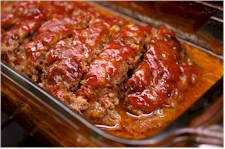
Claire MacClaine's Meat Loaf

It was sometime in June of that god-awful year in which Mac MacClaine lost Claire.  A freak traffic accident had claimed her life on a Saturday afternoon in April as she was going to a wedding.  Mac was to meet her there but instead met her surgeons at the hospital... to no avail.

Theirs was a wonderful marriage… one that you don’t see very often.  Some called it “perfect.”  It had all the essential ingredients; friendship, humor, passion, and respect.  The achievements of their lives and their long term goals had come about in the most natural of ways.  From their early days as a couple, they just seemed to click.  They made decisions together but there was rarely much discussion.  They just seemed to think alike.  They raised two wonderful daughters, now grown and making their own way.  A comfortable retirement was staring them in the face on that fateful day.  Mac had sold his manufacturing company and collected $60 million literally minutes before a massive cargo trailer decoupled from its cab, careened across the highway and ended the life of his beloved Claire.
Claire was a busy pediatrician but she still found time for her interest in cooking.  She claimed it was a great way to escape the demands of the practice.  She also knew that Mac loved a good meal on the table.  One of Mac’s favorites was Claire’s meat loaf.  Now, good meat loaf is hard to find.  Some is stuffed with too much filler.  Some is too bland.  Some just don’t have the right texture… “mouth feel,” as Mac called it.  But Claire’s was just right.  Claire’s meatloaf soon became the most requested meal for family birthday dinners at which the birthday person gets to pick the meal.
So it was one day in June when Sarah, Mac’s oldest daughter dropped by his house in the afternoon.  Sarah and her sister Nicki made a point of seeing their father as often as possible.  Truth be told, they secretly devised a schedule between them to insure that at least one of them was in touch with him every day.  They missed their mother terribly and could only imagine how badly Mac did.  Nicki called such visits “life support,” and Sarah agreed.  But both girls were crazy about their father and welcomed such “duty” cheerfully.
“You know what I’ve been missing?” Mac asked Sarah.
“What, Daddy?”
“Your mother’s meat loaf,” he answered.  “Man, what I would give for one of her meat loaves.”
They were sitting at the kitchen table where so many great meals and good times had taken place.  Sarah glanced over at the bookcase that occupied the corner near the window overlooking the back yard.  “Me, too,” she murmured quietly as got up.  She moved toward the bookcase.
“If you’re thinking there is a recipe for it over there, we’re going to be disappointed,” Mac said.  “She never looked at anything when she was making that meat loaf.  She had it in her head.”
Sarah took a loose leaf binder from one of the shelves.  “Well, she didn’t always have it in her head, Daddy.”  Sarah thumbed through pages and pages; some typed, some written in Claire’s neat hand.  She turned over newspaper clippings containing various dishes. 
Mac watched with a smile on his face as Sarah dealt with Claire’s filing system.  “I tell you she just knew it, Sarah.”
“Hmmm.  Here’s one.”  Sarah studied an old three by five index card.  It was soiled with what appeared to be spilled ingredients from plenty of use.  “I can’t read the first words but the last two are definitely ‘meat loaf.’  I’ll bet this is it.”
Mac’s eyes brightened and he stood.  “Let’s go to the grocery store.  Bring that card,” he said.
An hour later, Mac and Sarah were back and unpacking the recipe’s ingredients on the kitchen counter.
“Let’s make this together, Sarah.  I need to learn how,” Mac said.
“Okay,” she agreed.  “I’ll read off what to do and you do it.  Let’s double it and I’ll call Jim and Nicki.  You know they’ll want some.”  Sarah’s husband had once said he would walk across cut glass to get to Claire’s meat loaf.  And her sister, also a doctor, simply said that she would kill for it.
Sarah watched closely as Mac followed the directions that she read from the card.
The impromptu family dinner happened that night.  Seated around the table with empty plates before them, Mac leaned back in his chair and smiled.  “Claire left us many things,” he said.  “But her meat loaf is sure one of the best.”
“It sure is,” said Jim.
It was Nicki who declared, “There’s a reason they call it ‘comfort food,’ Daddy.”

Learn more about Mac and his family in “FollowingClaire.” 

Click here for Claire’s Meat Loaf recipe.

Saturday, April 7, 2012

What I Love About the Masters... And Phil Mickelson

The first weekend in April brings with it one of my favorite rites of spring.  I always look forward to watching the Masters Golf Tournament.  It conjures up happy memories of great times spent with my Dad.  Neither one of us were worth a flip playing the game.  But we sure did enjoy watching it together.  All golf fans know that the Masters is special.  It is the first “major” tournament of the year and is made so enchanting with the flowering dogwoods and azaleas that define Augusta National Golf Club.  On occasion, Dad and I would even place a bet on the winner.  He’s gone now and I miss him every day.  But each year when I’m watching the Masters, I’m sure he is too… from better seats than mine. 

I consider golf to be the last bastion of civility in sports.  You don’t see a bunch of thugs covered in tattoos playing in the PGA.  When a golfer is about to make a shot, the gallery extends him the courtesy of quiet as he addresses the ball and swings his club.  After a player makes a long putt, you don’t see him strutting around the green like a mating ape on steroids.  No one spikes a golf ball.

Perhaps it is the traditions of golf that appeal to me.  It seems that fans and players alike respect the customs and heritage of this game that began in the fifteenth century on that most unwelcoming landscape of the eastern coast of Scotland.   Golf has given us such symbols as the Green Jacket, the Claret Jug, and the Swilcan Bridge on the Old Course at St. Andrews.  It has given us such heroes as Bobby Jones, Ben Hogan, Byron Nelson and Sam Snead.

It was most fitting that this year’s Masters got underway when Billy Payne, President of the Augusta National Golf Club started the first threesome on Thursday morning.  It included Arnold Palmer, Gary Player, and Jack Nicklaus, gentlemen and champions all.   (If you don’t recognize those names, why in the hell have you read this far?)  No one was surprised to see that all three found the fairway with their drives.

There were many in the gallery who were there to watch, and appreciate this memorable group begin their round and start the tournament.   It was golf history.  Another Masters had begun.  I could once again look forward to four days of golfing competition at its very best.  Thanks to modern technology (the wide screen HDTV in my “man cave,”) I was there.  The beauty of this historic course, the intense competition, and the expectation of a tight finish going right down to the final hole… that’s what I love about the Masters.

 It took me a while to become a fan of Phil Mickelson.  Although he had numerous PGA tour wins and an incredible college/amateur background, I remember doubting that “Leftie” would ever win a big one, a “major.”  It seemed that when a big title was on the line, he was sure to choke.  Then the break came in the 2004 Masters when he sank a long birdie putt on 18 to win a back and forth battle with Ernie Els.  Phil had broken through. 

In 2010, Mickelson again won the Masters.  His approach shot on 13 was one that I will never forget.  His ball was situated squarely behind a pine tree with about 80 yards to the green.  What I won’t forget is that the ball he hit must have made two, yes, two, right hand turns to get around the tree and drop within putting distance of the pin.  (If you missed it then, watch for it in replays of past shots made.  You’ll see it.)

But, putting golf aside, Phil Mickelson demonstrates a sense of priorities that is often lost with successful athletes.  He’s a devoted husband and father.  When he won the Masters in 2010, it came after a yearlong battle his beloved wife Amy fought with breast cancer.  At the same time, his mother was also fighting cancer.  CBS’s Jim Nance called Phil’s Masters victory a “win for the family.”  The tearful reunion of Phil and Amy on the 18th green would attest to that.  We were all Mickelson fans that day.

But what do I love about Phil Mickelson?   On Thursday morning when the tournament began with Billy Payne calling the threesome of Palmer, Player and Nicklaus, one of the faces in the gallery was that of Phil Mickelson.  He was there at the first tee over six hours before he was scheduled to tee off himself.  He was there like the rest, to see three legends of the game, his game, begin an historic round of golf.

Phil Mickelson appreciates the history and the traditions of golf.  It may be his livelihood, but he appreciates those things that aren’t spelled out on the leader board.  He appreciates that it is still a sport where gentlemen compete with courtesy and decorum.  And, civility.

That’s what I love about the Masters… and Phil Mickelson.